Posts

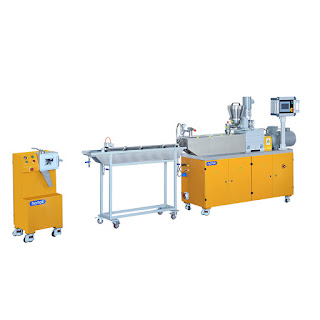
Desktop Extruder – Compact Power from Hartek Technologies Co., Ltd.

Image
In industries where innovation and rapid prototyping are crucial, small and versatile equipment is in high demand. Desktop extruders are transforming how researchers, educators, and small manufacturers process materials by providing industrial-grade performance on a compact scale. Hartek Technologies Co., Ltd. has emerged as a leader in this field, offering advanced Desktop Extruders tailored for laboratories, training centers, and pilot production units. About Hartek Technologies Co., Ltd. Known globally for its cutting-edge extrusion and processing systems, Hartek Technologies Co., Ltd. specializes in designing reliable, efficient, and customizable machinery. With decades of expertise, the company delivers solutions that meet international standards while keeping user convenience at the forefront. Key Highlights: Innovative Engineering: Precision systems developed for research and small-batch manufacturing. Global Reach: Trusted by universities, labs, and niche producers w...

5 Essential Features of Lab Spinning Machines

Image
Here are the 5 essential features of modern lab spinning machines (also known as laboratory spinners or spin coaters), which are critical for thin film deposition in research and development. 1. Precise Speed Control and Range Why it's essential:  The rotational speed is the primary variable controlling film thickness and uniformity. A wider range allows for depositing a variety of materials with different viscosities. Low-end speed (e.g., 100 - 500 rpm):  Crucial for the "spread cycle," where the solution is evenly distributed over the substrate without excessive甩出 (being thrown off). High-end speed (e.g., 1,000 - 10,000+ rpm):  Critical for the "spin cycle," where centrifugal force thins the solution and evaporates the solvent, defining the final film thickness. Higher speeds generally produce thinner, more uniform films. 2. Programmable Acceleration Ramp Why it's essential:  How quickly the spinner reaches its target speed is just as important as th...

Lab Blowing Film Machine - labextrusion.com

labextrusion.com - The Lab Blowing Film Machine is a compact, precision-engineered system designed for producing thin plastic films for research, testing, and small-scale production. Ideal for laboratories and R&D facilities, it allows controlled extrusion and blowing of polymer materials to create uniform films with adjustable thickness and width.  

What Are the Benefits of a Lab Blowing Film Machine?

Image
Lab blowing film machine s are essential tools in the plastic film manufacturing industry, particularly for research and development (R&D), small-scale production, and quality control. These compact yet highly efficient machines allow manufacturers, researchers, and educational institutions to produce high-quality plastic films under controlled conditions. But what exactly are the benefits of using a lab blowing film machine? Below, we explore the key advantages that make these machines indispensable in modern film production and testing. 1. Cost-Effective Research & Development Developing new film formulations or testing different polymer blends can be expensive when done on an industrial scale. A lab blowing film machine allows researchers to conduct small-scale trials, minimizing material waste and reducing costs. This enables companies to experiment with new materials, additives, and processing conditions before committing to full-scale production. 2. High Precision...

What is a Sheet Extruder

Image
A sheet extruder is an  integrated industrial system  designed to continuously produce  flat plastic sheets  of a specific thickness and width from raw plastic resin pellets. It's a fundamental machine in the plastics manufacturing industry. Core Components of a Sheet Extrusion Line 1.        Resin Feed Hopper: o     Holds the raw plastic pellets (or sometimes powder/regrind). o     Often includes drying systems if the resin is hygroscopic (absorbs moisture). 2.      Extruder: o     The heart of the system. Consists of: §   Barrel:  A heated, cylindrical metal housing. §   Screw:  A rotating shaft inside the barrel with specially designed flights (channels). o     Function: Transports, compresses, melts, mixes, and homogenizes the plastic under controlled heat and pressure. 3.        Die: ...

Introduction to Lab Spinning Machine – Hartek Technologies Co., Ltd.

Image
  Hartek Technologies Co., Ltd. takes pride in presenting its state-of-the-art Lab Spinning Machine , engineered to meet the rigorous demands of textile research and development. Designed for laboratory-scale spinning trials, this compact yet powerful equipment enables accurate simulation of industrial spinning processes. It is an ideal solution for spinning institutes, R&D centers, and textile manufacturers seeking to analyze fiber behavior, optimize yarn properties, and test raw materials in small batches. Key Features and Advantages: Versatile Fiber Compatibility: Efficiently processes natural fibers (cotton, wool), synthetics (polyester, nylon), and blends. Precision Engineering: Offers controlled drafting, consistent tension, and optimized twist settings to produce high-quality sample yarns. User-Friendly Interface: Equipped with intuitive controls and digital display for ease of operation and accurate data monitoring. Modular Design: Faci...

Lab Spinning Machine: Precision Textile and Fiber Research Equipment

Image
  A lab spinning machine is an essential piece of equipment used in textile and material research for developing and testing new fiber compositions. It is widely used in laboratories to simulate the spinning process on a small scale before large-scale production. Hartek Technologies Co., Ltd. offers high-quality lab spinning machines designed for precision, efficiency, and versatility. Key Features of Lab Spinning Machine 1. High-Precision Spinning Mechanism Equipped with advanced control systems, these machines provide consistent fiber formation, ensuring accuracy in research and development. 2. Compact and User-Friendly Design The lab spinning machine is designed for ease of use and can fit into laboratory environments without occupying excessive space. 3. Adjustable Spinning Parameters Users can control factors such as speed, tension, and temperature, allowing flexibility in fiber experimentation. 4. Energy-Efficient and Low Maintenance H...

Desktop Extruder: Labextrusion.com


Two Roll Mill: A Key Machine for Rubber and Plastic Processing

Image
  A two roll mill is an essential machine used in the rubber and plastic industries for mixing, refining, and homogenizing raw materials. It ensures uniform blending of polymers, additives, and fillers, enhancing the quality of final products. Hartek Technologies Co., Ltd. offers high-performance two roll mills designed for precision, efficiency, and durability. How a Two Roll Mill Works A two roll mill consists of two parallel rollers rotating at different speeds. Raw materials are fed between the rollers, where they are sheared and compressed, leading to thorough mixing. The temperature and speed can be controlled for optimal processing. Benefits of Using a Two Roll Mill 1. Efficient Mixing and Blending The mill ensures even distribution of materials, reducing inconsistencies in the final compound. 2. Precision in Material Processing Adjustable roller gaps allow for accurate control over material thickness and consistency. 3. Versatility for V...

Precision Lab Hydraulic Presses for Research & Industrial Use

Image
Lab Hydraulic Presses are vital tools for research, testing, and small-scale production across various industries. Hartek Technologies Co., Ltd. specializes in crafting advanced hydraulic presses that cater to the specific needs of laboratories and industrial applications. With a focus on precision, reliability, and user-friendly operation, these presses have become indispensable in material testing and processing. Features and Applications Hartek's Lab Hydraulic Presses are designed for precision control and versatility. Equipped with high-performance hydraulic systems, they ensure consistent pressure application, making them ideal for tasks such as material compaction, molding, and sample preparation. The presses are customizable, with adjustable pressure ranges, temperature controls, and interchangeable molds to suit diverse experimental requirements. These presses find applications in industries such as pharmaceuticals, polymers, composites, and metallurgy. Re...

Role of Lab Plastic Extruder in Material Research and Prototyping

Image
A lab plastic extruder is a specialized machine designed for the small-scale extrusion of plastic materials. It consists of a heated barrel, a screw mechanism, and a die that shapes the plastic into the desired form. The primary function of the extruder is to melt plastic pellets or powder and force the molten material through a die to form sheets, films, rods, or other profiles. The extruder’s ability to precisely control temperature, pressure, and screw speed makes it an invaluable tool for laboratory-scale experimentation and product development. How Does a Lab Plastic Extruder Work? Feeding : The plastic material, often in the form of pellets, is loaded into the hopper at the top of the extruder. These pellets can be made from various types of polymers, such as polyethylene (PE), polypropylene (PP) or other thermoplastics. Melting : The lab plastic extruder is equipped with heating zones that gradually raise the temperature of the material as it moves along the screw. The s...

Overview of the Cast Film Line Manufacturing Process

Image
Cast Film Line refers to a manufacturing process used to produce thin plastic films or sheets by casting a molten polymer onto a chilled roller or a flat surface. This process is commonly used in the production of various types of films for packaging, medical, electronics, and other applications. Process Of Cast Film Line: Extrusion : The process starts with the extrusion of molten polymer material (like polythene , polypropylene, or polyester) from an extruder. Casting : The molten polymer is then spread or "cast" onto a moving surface, such as a chilled drum or a flat conveyor belt. Cooling : The cast film rapidly cools and solidifies as it moves along the surface. The cooling is usually achieved by passing the film over a series of rollers or using air-cooling. Wind-Up : Once the film has solidified, it is wound onto large rolls for further processing or conversion into finished products. Key Features of Cast Film Line: High...

Understanding the Pelletizer Line: Streamlining Plastic Processing

Image
A pelletizer line is a system designed to convert bulk plastic materials, often in the form of flakes or powders, into uniform pellets. This process is vital for ensuring that the material is consistent in size and quality, which is crucial for downstream processing and manufacturing. How Does a Pelletizer Line Work? The operation of a pelletizer line generally involves several key steps: 1.        Feeding : Raw plastic material is fed into the system. This material can be sourced from recycling operations or produced as a by-product of manufacturing. 2.        Melting and Extrusion : The material is heated and melted in an extruder, where it is forced through a die to form a continuous strand of molten plastic. 3.        Cooling : The extruded strands are cooled, often in a water bath, to solidify the material and prepare it for cutting. 4.        Pelletiz...